
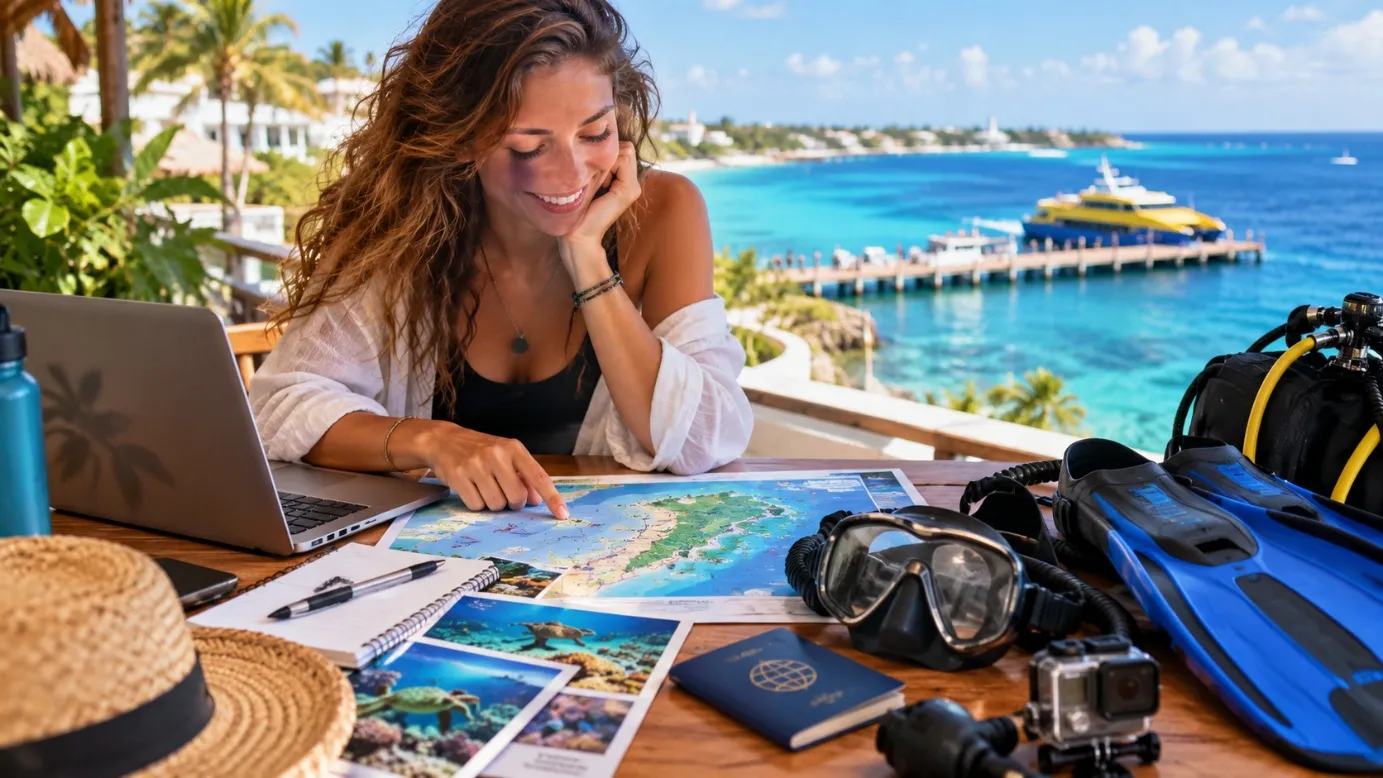
A small island off Mexico’s Caribbean coast has become a favorite classroom for new divers. Warm water, gentle slopes and generous visibility make the early learning curve far less stressful, and the reefs are close enough to reach within minutes of leaving the dock.
If you have never planned a dive holiday before, the details can feel overwhelming. This roadmap breaks the process into simple stages, from certification to your very first reef, so you arrive prepared and excited instead of anxious. Think of it as a friendly checklist you can follow at your own pace.
Get Certified Before You Fly
Most operators accept an Open Water card from any major training agency. If you are not certified yet, you can finish the classroom and pool sessions at home, then complete your open-water dives once you arrive. This keeps the vacation portion focused on the sea.
That approach saves precious holiday time and keeps nerves low. Ask about class size before booking, because smaller groups mean more personal attention while you practice mask clearing, regulator recovery and buoyancy control. A patient, encouraging instructor makes a huge difference to how quickly you feel at home underwater, and you will remember that kindness long after the trip ends.
Understand How a Dive Day Works
Boats usually leave in the morning for a two-tank trip, with a surface interval between dives. Your guide gives a briefing covering depth, route, time limits and hand signals before anyone enters the water, so you always know what to expect below.
Plan to feel relaxed rather than rushed. Eat a light breakfast, drink plenty of water, and skip the late-night out beforehand, since fatigue and dehydration make every dive feel harder than it needs to be. Arrive at the pier a little early so you can meet your crew, check your gear and settle into the day without any last-minute stress.
Why the Island Suits Beginners
Many first-timers discover that Cozumel scuba diving builds confidence fast. Calm, sheltered water on the leeward side and a healthy reef just offshore mean you see colorful life even on shallow dives, without battling surf or long swims.
Because visibility often exceeds 100 feet, keeping track of your guide and buddy is easy. That clarity reduces anxiety and lets you focus on breathing slowly, relaxing your shoulders and enjoying the scenery drifting calmly around you.
Learn to Handle Gentle Currents
The island is famous for drift diving, where the current carries you along the reef while the boat follows your bubbles. Beginners are usually matched with calmer sites, and the guide sets a comfortable pace that suits the whole group rather than the fastest swimmer.
Stay close to your guide, keep your fin kicks smooth, and never grab the reef to stop yourself. Good buoyancy protects both you and the coral, and it improves with every single dive. Do not worry if the first few drifts feel unusual.
Pack Smart and Stay Safe
Bring reef-safe sunscreen, a rash guard, your certification card and a refillable bottle. Marine park rules protect the corals, so touching, feeding or collecting anything is strictly off limits. A small dry bag also helps keep documents safe on the boat.
Choose travel insurance that covers diving, and learn where the nearest recompression chamber is located. Always respect the recommended no-fly interval after your final dive before heading to the airport, and never push your limits just to squeeze in one extra descent.
Make the Most of Surface Days
Diving is only part of the story, and your body needs rest between boat mornings. Wander the waterfront, enjoy fresh seafood, or relax at a quiet beach while your energy returns and your muscles recover from carrying heavy gear.
Use those free afternoons to log your dives and jot down questions for tomorrow’s guide. Small reflections like these speed up progress, strengthen your skills and keep the whole holiday enjoyable rather than exhausting or repetitive.
Conclusion
A smooth first trip comes down to preparation, patience and good guidance. Choose a reputable operator, respect the reef and move at a pace that feels comfortable. Every experienced diver started exactly where you are now, so be kind to yourself on those early dives.
For trusted planning help, dive center listings and reef guides, Cozumel Dive Hub is a handy place to start. With the basics covered, your first descent will feel less like a test and more like the beginning of a lifelong adventure.