
Imagine standing at the base of Mount Everest, the world’s highest peak, with the Khumbu Glacier sparkling under the sun and snow-capped giants like Lhotse and Nuptse towering above you. Now picture capping that epic journey not with days of knee-jarring descent, but with a thrilling helicopter flight that whisks you back over the Himalayas in mere minutes. Welcome to the Everest Base Camp Trek with Helicopter Return—also known as the Everest Helicopter Trek—a perfectly balanced adventure that blends heart-pounding trekking with modern convenience.
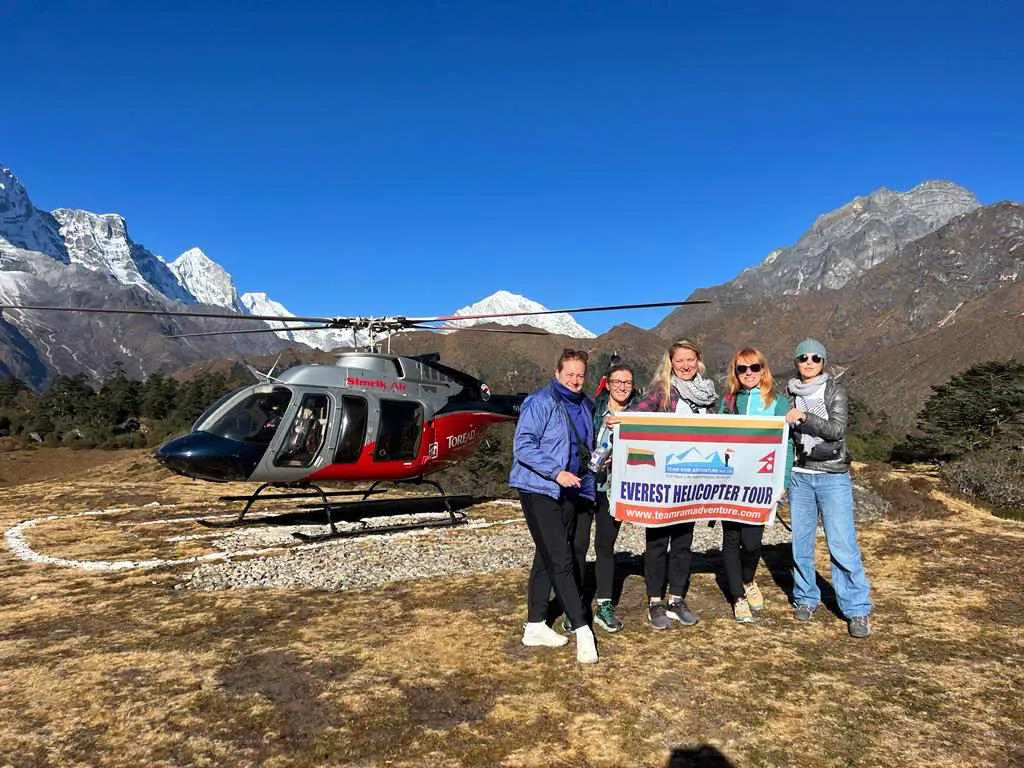
This hybrid experience is ideal for time-conscious adventurers who crave the authentic thrill of the classic Everest Base Camp route but want to skip the exhausting return hike. In just 9–12 days (depending on your chosen package), you’ll trek through Sherpa villages, ancient monasteries, and UNESCO-listed Sagarmatha National Park, reach Everest Base Camp (5,364 m) and Kala Patthar (5,555 m) for sunrise views, then soar back by helicopter. It’s professional-grade adventure with a friendly, approachable twist—perfect for first-time high-altitude trekkers or seasoned hikers seeking efficiency without sacrificing magic.
Why Choose the Everest Base Camp Trek with Helicopter Return?
The traditional Everest Base Camp trek takes 14–16 days round-trip, with the descent often feeling tougher than the climb due to fatigue and prolonged high-altitude exposure. The Everest Helicopter Trek changes the game by replacing those final 3–4 trekking days with a scenic 15–20 minute helicopter ride from Gorakshep to Lukla (or even directly to Kathmandu in premium packages).
Key benefits include:
-
Time savings: Complete your dream trek in under two weeks—ideal for busy professionals.
-
Reduced physical strain: Less risk of altitude-related issues on the way down, plus you conserve energy for the highlight moments.
-
Breathtaking aerial perspective: Fly over the Khumbu Glacier, icy waterfalls, and dramatic valleys for views you’d never see on foot.
-
Enhanced safety and comfort: Helicopters can operate in slightly lower visibility than fixed-wing planes, minimizing weather delays at Lukla airport.
Whether you’re celebrating a milestone, chasing a lifelong bucket-list goal, or simply craving Himalayan serenity, this trek delivers unforgettable memories with built-in convenience.
Detailed Day-by-Day Itinerary (11-Day Sample)
Most operators offer flexible 9–12 day packages. Here’s a typical, well-paced 11-day itinerary that includes proper acclimatization for safety and enjoyment:
Day 1: Arrival in Kathmandu (1,400 m)
Settle into your comfortable 3-star hotel. Enjoy a welcome briefing with your expert guide, gear check, and perhaps a stroll through vibrant Thamel. Overnight in Kathmandu.
Day 2: Fly to Lukla & Trek to Phakding (2,610 m)
An early scenic flight (or optional helicopter upgrade) to Lukla’s thrilling airstrip. Begin your trek along the Dudh Koshi River, crossing suspension bridges amid pine forests. Easy 3–4 hours. Overnight in a cozy teahouse.
Day 3: Phakding to Namche Bazaar (3,440 m)
Steady uphill through rhododendron forests and Sherpa villages. The highlight? Your first stunning views of Everest and surrounding peaks. 5–6 hours. Overnight in Namche, the “gateway to Everest.”
Day 4: Acclimatization Day in Namche Bazaar
Rest and explore! Hike to the Everest View Hotel or Sherpa Culture Museum. Gentle walks help your body adjust to altitude while soaking in local hospitality.
Day 5: Namche to Tengboche (3,810 m)
Descend through forests, then climb to the famous Tengboche Monastery for prayer flags, mani walls, and panoramic Ama Dablam views. 5–6 hours.
Day 6: Tengboche to Dingboche (4,410 m)
Trek through alpine meadows with yaks grazing nearby. Reach the picturesque village of Dingboche. 4–5 hours.
Day 7: Acclimatization in Dingboche
Short optional hike to Nangkartsang Peak (5,083 m) for better acclimatization and jaw-dropping glacier vistas. Hydrate, relax, and chat with fellow trekkers.
Day 8: Dingboche to Lobuche (4,910 m)
Enter the rugged high-alpine zone. Dramatic landscapes and the first close-up of the Khumbu Glacier. 4–5 hours.
Day 9: Lobuche to Gorakshep & Everest Base Camp (5,364 m)
Trek to Gorakshep, drop your bags, then push on to EBC. Stand at the foot of Everest amid towering icefalls. Return to Gorakshep for the night. 7–8 hours total.
Day 10: Kala Patthar Sunrise & Helicopter Return
Pre-dawn hike to Kala Patthar (5,555 m) for the iconic Everest sunrise—truly life-changing. Descend to Gorakshep, pack up, and board your shared helicopter. Soar over the Himalayas back to Lukla or Kathmandu in style. Overnight in Kathmandu.
Day 11: Departure Day
Relax with a final Kathmandu breakfast before your international flight home—or extend with a city tour.
Highlights and Unforgettable Experiences
-
Cultural immersion: Sherpa hospitality, monasteries, and vibrant villages.
-
Natural wonders: Khumbu Icefall, glaciers, and 8,000 m+ peaks.
-
Personal triumph: Reaching EBC and Kala Patthar—proof of your resilience.
-
Helicopter magic: The return flight feels like a private aerial tour of the roof of the world.
Preparing for Your Adventure: Tips and Essential Gear
Fitness is key—train with cardio, hiking, and stairs for 4–6 weeks beforehand. No technical climbing required, but strong knees and lungs help. Pack layers (base layers, fleece, waterproof jacket), sturdy boots, trekking poles, sunglasses, sunscreen, and a good sleeping bag. Your guide and porter team handle the heavy lifting.
Pro tips: Drink 3–4 liters of water daily, follow the “climb high, sleep low” rule, and listen to your body. Reputable operators provide pulse oximeters, first-aid kits, and emergency oxygen.
Best Time to Trek: Seasons and Weather Insights
Spring (March–May) brings blooming rhododendrons and stable weather. Autumn (September–November) offers crystal-clear skies and comfortable temperatures. Both seasons maximize your chances of stunning views and reliable helicopter flights. Avoid monsoon (June–August) for rain and winter (December–February) unless you love snow and solitude.
Understanding the Costs: What to Expect
The Everest Base Camp Trek with Helicopter Return typically costs $2,050–$2,850 per person (2026 rates), varying by group size and inclusions. Solo supplements apply, but group discounts make it more affordable. Packages usually cover:
-
Airport transfers and Kathmandu hotel
-
Lukla flights
-
Shared helicopter return
-
Teahouse accommodations and all meals on trek
-
Experienced guide, porter, permits, and taxes
Extras like international flights, visa, insurance, and tips are separate. Always choose licensed, sustainable operators for ethical trekking.
Conclusion
The Everest Base Camp Trek with Helicopter Return isn’t just a hike—it’s a transformative journey that respects your time while delivering pure Himalayan wonder. Whether you’re drawn to the cultural depth, physical challenge, or that helicopter finale, this trek offers the perfect blend of adventure and ease. Book with a trusted local team, prepare well, and get ready for stories you’ll tell for a lifetime.
Takeaway: Don’t let a busy schedule keep you from Everest. With the helicopter return option, the world’s highest peak is more accessible than ever—proving that the best adventures are the ones you actually complete.
FAQ
1. How difficult is the Everest Helicopter Trek?
It’s strenuous due to altitude but manageable with good fitness and acclimatization. The helicopter return makes the overall trip easier than the classic version.
2. Is the helicopter flight safe and reliable?
Yes—operators use experienced pilots and modern helicopters. Flights are weather-dependent, but they often operate when fixed-wing planes cannot.
3. What’s the maximum altitude reached?
Kala Patthar at 5,555 m; Everest Base Camp at 5,364 m.
4. Do I need previous trekking experience?
No, but prior high-altitude or multi-day hiking helps. Guides ensure your safety every step.
5. Can I customize the trip?
Absolutely—many operators offer private departures, luxury upgrades, or extensions like Gokyo Lakes.
6. What about altitude sickness?
Acclimatization days and professional monitoring minimize risks. The shorter return further reduces exposure.